What to Expect When Considering Moroccan Bath
If you are a Filipino woman in Abu Dhabi thinking about trying a Moroccan bath for the first time, start with this: expect a body-focused hammam ritual built around warmth, cleansing, and exfoliation rather than a quiet facial-style treatment. The Moroccan National Tourist Office explains the traditional hammam as a ritual using products such as black soap and a kessa scrub glove for deep exfoliation and relaxation, while Abu Dhabi City Municipality highlights hygiene and tool sterilisation requirements for beauty centres.
That means the key decision is not whether the service sounds luxurious. It is whether an exfoliating body treatment suits your skin that day, whether the venue handles hygiene well, and whether the exact service setup matches your comfort level.
What a Moroccan bath usually involves
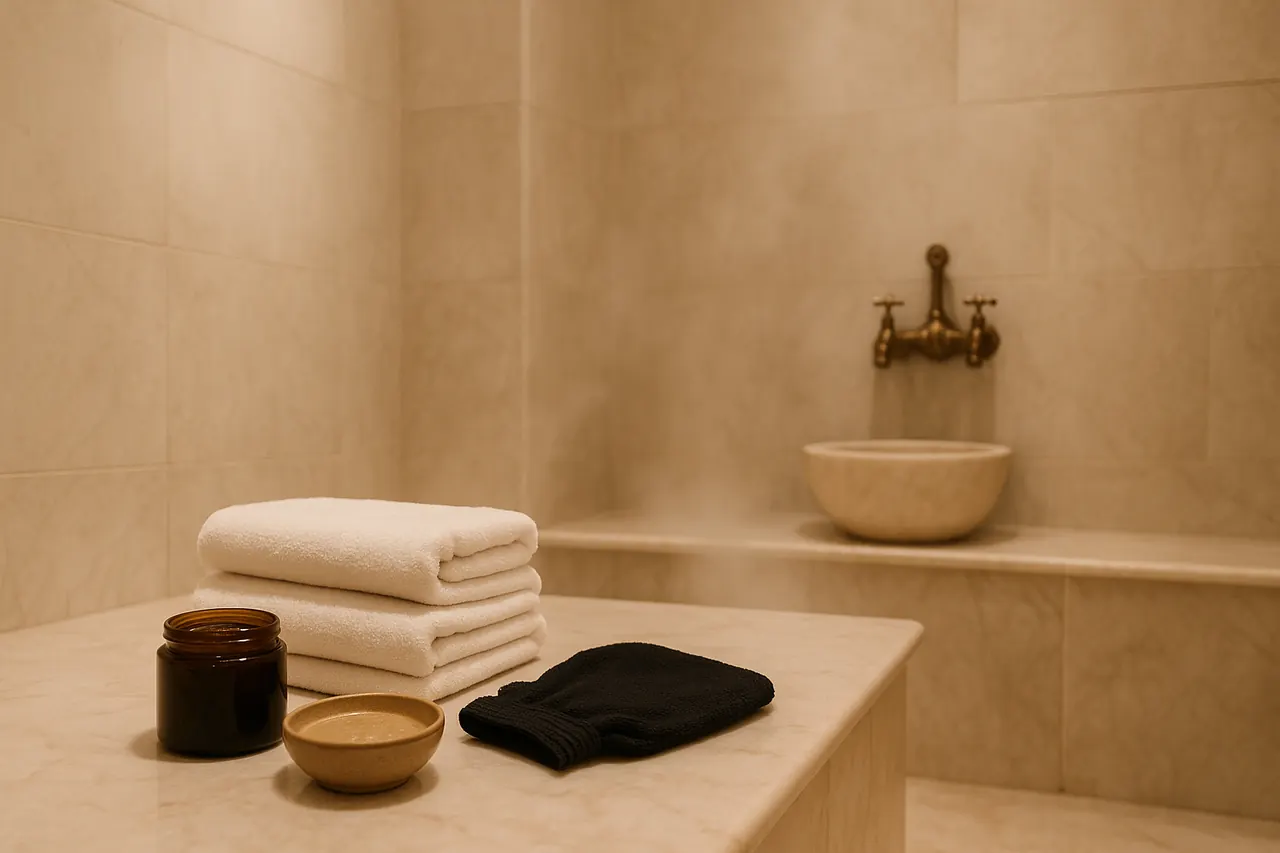
A Moroccan bath, or hammam, is traditionally centred on steam or warmth, soaping, and exfoliation. The Moroccan National Tourist Office wellness page describes it as a ritual where scrubbing and soaping are practised using local products such as black soap, ghassoul or rhassoul, rose water, herbs, green clay, and a kessa glove.
A concrete example from an official spa treatment page shows a common sequence. The Kempinski Moroccan Bath page describes black soap cleansing, kessa-mitt exfoliation, and a nourishing rhassoul mud wrap.
In practical terms, a first appointment may include:
- a warm or steamy start
- application of cleansing products such as black soap
- mechanical exfoliation with a scrub glove
- rinsing or showering
- sometimes an added mud wrap or moisturizing step, depending on the venue
Not every Moroccan bath includes the same extras, so it is worth checking the basic inclusions before you confirm your booking.
When a Moroccan bath may be a good fit
A Moroccan bath is best matched to someone who wants full-body exfoliation and a traditional cleansing ritual. The official Moroccan tourism description presents the hammam as a chance to deeply exfoliate the skin while also providing relaxation and well-being.
That makes it a stronger match when your main goal is body exfoliation and that freshly cleansed feeling, not nail care, hair care, or a massage-only visit. In other words, choose this when you want a scrub-focused body ritual. Avoid it that day if what you really want is only quiet relaxation without vigorous exfoliation.
For a reader in Abu Dhabi, that difference matters in everyday life. If you spend time moving between outdoor heat and air-conditioned spaces, or you simply want a body treatment before an event or weekend plan, a Moroccan bath may make more sense than booking a service aimed at hair or nails. Nationality does not change the treatment itself, but this decision path can help a Filipino reader compare the service in a practical way.
What results are realistic after one session
After one session, realistic expectations are temporary rather than dramatic. Based on the traditional description and the treatment sequence documented by Moroccan tourism guidance and the Kempinski treatment page, you can reasonably expect skin to feel smoother and the overall experience to feel refreshing and relaxing.
What you should not expect from one visit is a permanent change or a medical skin fix. A Moroccan bath is an exfoliating wellness ritual. It may leave skin feeling cleaner and smoother, but how your skin feels afterward can depend on your skin condition, the scrub intensity, and how your skin reacts after exfoliation.
Who should be cautious before booking
Because a Moroccan bath involves mechanical exfoliation, it is not ideal for everyone at every moment. The American Academy of Dermatology guidance on exfoliation explains that mechanical exfoliation may be too irritating for dry, sensitive, or acne-prone skin. It also advises avoiding exfoliation if you have open cuts, wounds, or sunburn, and notes that products such as retinoids, retinol, or benzoyl peroxide can make skin more sensitive.
Before booking, pause or ask for advice if any of these apply:
- your skin is sunburned, irritated, or already stinging
- you have open cuts, broken skin, or a rash
- you recently used strong exfoliants or active skincare such as retinol or benzoyl peroxide
- your skin is very dry, reactive, or acne-prone
- you know you react badly to fragranced or traditional body products
It is also sensible to think about personal comfort. A Moroccan bath is more hands-on than many beauty services, so if privacy or scrub intensity matters to you, ask about the setup before you commit.
What to disclose before your appointment
To avoid an uncomfortable experience, mention any skin sensitivity before booking, not after the treatment begins. Useful details to share include recent sun exposure that left you burned, active irritation, known allergies, and current use of strong skincare products. That matters because the service may involve traditional ingredients and vigorous exfoliation, both of which can be uncomfortable on sensitised skin. This caution is supported by the AAD exfoliation advice and the documented use of products such as black soap, herbs, clays, and rose water on the Moroccan National Tourist Office page.
What to compare before choosing where to go in Abu Dhabi
For Moroccan bath services, cleanliness should be judged beyond the reception area. Abu Dhabi City Municipality says beauty centres must comply with health requirements related to general hygiene and the sterilisation of tools and equipment used in beauty services, and stresses sterilising tools after each use and maintaining high levels of sanitation. See the Abu Dhabi City Municipality campaign notice.
That gives you a practical comparison checklist:
- Wet-room cleanliness: the bath area should look clean and well maintained, not only the public spaces.
- Fresh towel handling: towels and linens should appear properly managed and changed between clients.
- Tool hygiene: ask how any reusable tools are cleaned and how scrub items are handled.
- Product handling: ask what products are used and whether staff can explain them clearly.
- Communication: a good consultation should cover skin sensitivity and comfort level before the service starts.
- Privacy setup: ask whether the service is done in a private room and what the arrangement is if privacy matters to you.
This matters in Abu Dhabi because municipal inspections focus on sanitation, sterilisation, and approved health practices. Good hygiene is not a small detail for an exfoliating body treatment. It directly affects comfort and confidence.
What practical details to confirm before booking
Before you reserve a slot, confirm the exact version of the service rather than assuming all Moroccan baths are the same.
Ask these questions:
- What is included? Some venues may offer only cleanse and scrub, while others include a mud wrap or extra finishing step. A documented example from Kempinski includes cleanse, exfoliation, and mud wrap.
- Which products are used? Traditional hammam ingredients may include black soap, ghassoul or rhassoul, herbs, rose water, and green clay according to the Moroccan National Tourist Office.
- How long is the appointment? Time varies by venue. One documented example is 50 minutes on the Kempinski treatment page, but you should confirm the actual duration for the Abu Dhabi service you are considering.
- How is pricing structured? Confirm whether the quoted price covers only the base bath or includes extras. A price on another venue's page, such as EUR 125 in the Kempinski example, is specific to that venue and not a guide to Abu Dhabi pricing.
- What should you avoid before coming? If your skin is sunburned, broken, or sensitised, postpone. That caution is based on the AAD exfoliation guidance.
If this is your first session, a sensible approach is to start with the basic version and clarify the scrub intensity instead of choosing the most elaborate option immediately.
A practical first time scenario
Imagine a Filipino reader in Abu Dhabi who wants to book a Moroccan bath before a family gathering or a rest day. The treatment itself does not change because of nationality, but the decision process stays the same: check whether your skin is calm that week, compare hygiene and privacy standards, and ask exactly what the service includes.
For example, if you have been out in the sun recently or your skin already feels irritated, it makes sense to postpone. If your skin feels normal and you mainly want a body exfoliation ritual rather than a massage-only service, then a Moroccan bath may be the more suitable choice. That kind of comparison is usually more helpful than focusing on broad marketing terms.
How to prepare for your first Moroccan bath
Preparation does not need to be complicated, but it should be sensible.
Before your appointment:
- do not book if you have open cuts, wounds, or sunburn
- be careful if you are using retinoids, retinol, or benzoyl peroxide
- tell the salon in advance if your skin is sensitive or reactive
- ask what products will be used if you have known sensitivities
These points are supported by the AAD advice on safe exfoliation.
What to do right after the treatment
The clearest evidence-backed step after exfoliation is to moisturize. The American Academy of Dermatology specifically recommends applying moisturizer immediately after exfoliating.
Also pay attention to how your skin feels. If your skin feels unusually red, irritated, or over-scrubbed rather than simply smooth, that can be a sign the treatment was too harsh for your skin at that time. In Abu Dhabi's hot climate, where heat and sun can already put stress on the skin, a gentle rest-of-day routine makes sense after an exfoliating body treatment.
Signs the treatment may have been too harsh
Based on the AAD guidance, watch for:
- ongoing redness rather than brief mild sensitivity
- burning or stinging
- worsening dryness
- skin that feels over-scrubbed rather than simply smooth
If that happens, avoid more exfoliating treatments until your skin settles.
FAQ
Is a Moroccan bath the same as a massage?
No. A Moroccan bath is mainly a steam, cleansing, and exfoliation ritual. It is more body-scrub focused than massage focused, based on the official traditional hammam description.
Should first-time clients ask about privacy?
Yes. Privacy arrangements can vary by venue, so it is worth confirming whether the service is done in a private room and what the setup involves before booking.
Can sensitive skin handle a Moroccan bath?
Sometimes, but not always. The AAD notes that mechanical exfoliation may be too irritating for dry, sensitive, or acne-prone skin, so caution is sensible.
What is the most important thing to check in Abu Dhabi?
Hygiene standards are a key comparison point. Abu Dhabi City Municipality specifically stresses sanitation and sterilisation of tools and equipment in beauty services. See the municipality guidance.
Your next step
If you are interested in trying a Moroccan bath, the best next step is to ask about the exact service setup before you book: what the treatment includes, which products are used, whether the room is private, and how hygiene is handled for towels and tools. Naz Beauty Salon offers Moroccan Bath in Abu Dhabi, so you can use the Naz Beauty Salon website or the contact details to ask about the service and mention that it would be your first session, along with any skin sensitivity or recent use of strong skincare products.